

Raised in Alabama, I’m accustomed to North-South mentalities. Above the Mason-Dixon lies a storied realm of tea without sweetener, of hellishly cold winters. Charleston similarly holds a history of contentious locational relativity to Broad Street (although the real distinction may now be Line Street).
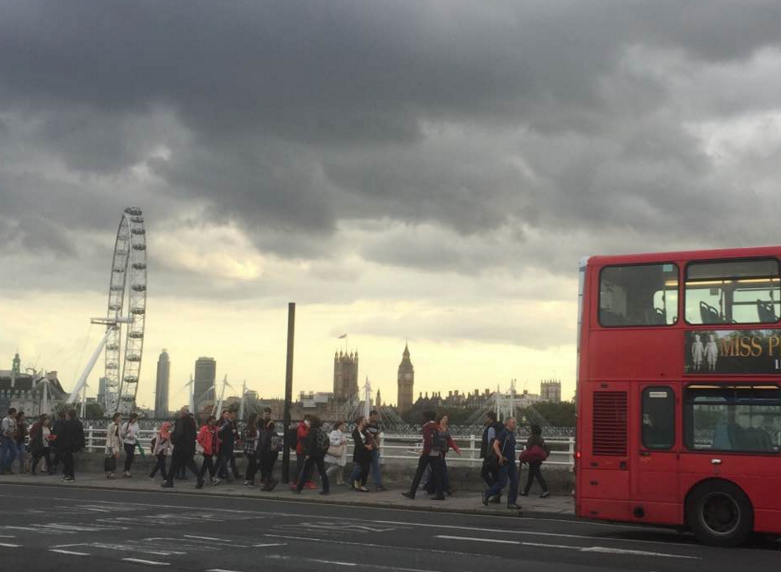
The distinct marker in London is the roiling brown of the Thames River.
 |
|
The view on the walk from Waterloo to Strand Campus |
When speaking with Londoners during our tourist time as a family, it was a 50/50 split regarding whether my flat in Elephant & Castle, located in South London, was acceptable for a young, female student. Some were aghast; others were encouraging. So far, I am enthusiastic.
Walworth Road, particularly the stretch from my flat at Elephant & Castle to the KCL Denmark Hill campus, is an area of noted superdiversity. Unidentifiable languages float through my open window. When I walk down the street, I see travelers shouldering heavy backpacks, young couples pushing prams, older men sharing pints on the sidewalk tables of the The Tankard pub, fabric parting to reveal only women’s eyes as they go about their shopping, children in adorably formal primary school uniforms, and students running to catch the bus. Often, I think someone is speaking another language only to realize it’s a heavily accented English.
The following image from LSE researcher Suzanne Hall demonstrates the superdiversity present on my street, connecting the national origins of shop owners to their storefronts on Walworth Road (2006). I first saw this image last week at an event co-sponsored by the KCL Centre for Global Health and the Royal Society of Medicine. I also learned that a quarter of this neighborhood’s population turns over every year, and this may well include me. I won’t live be able to live in the same student accommodation so will have to move buildings, but I’m not tempted to move neighborhoods.
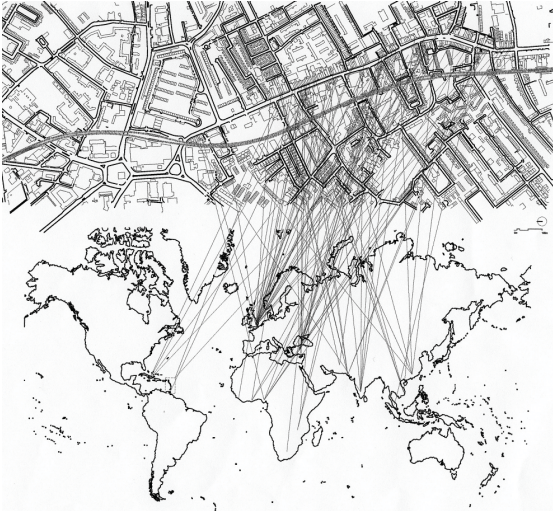 |
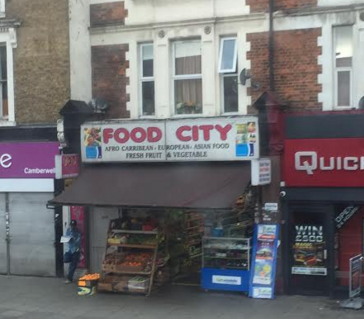
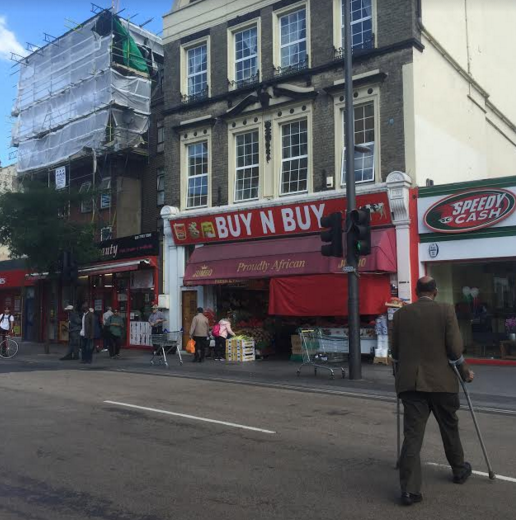
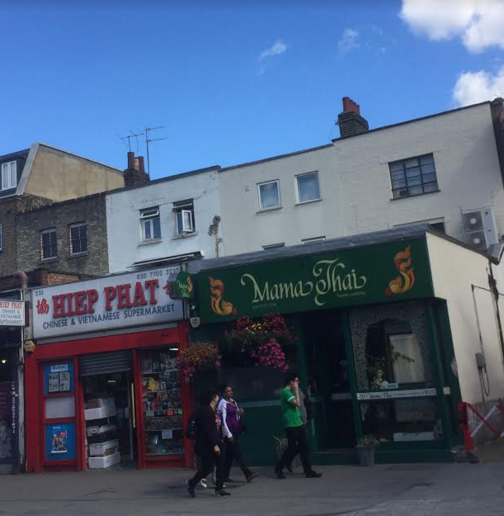
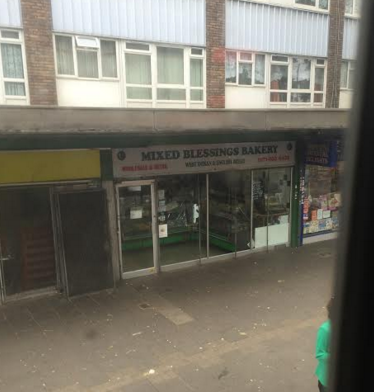
On Walworth Road, superdiversity doesn’t compartmentalize into a salad bowl; cultures melt and overlap. There’s no Little Italy, and there are hardly even any strictly Italian restaurants. In fact, superdiversity creates a certain capitalistic necessity for businesses to attract to all subsets of the heterogeneous population. As the MSC Academic Lead of our department, Dr. Paula Baraister, noted in a lecture at the Royal Society of Medicine, this marketing maneuver is visible on business signs all down the block: owners pander their goods to nearly every nationality.
 |
|
Afro Carribean – European – Asian Food – Fresh Fruit & Vegetable |
There’s a a palpable sense of communality in London. Commuters perform contortionist feats on the morning tube, acrobatically twisting themselves and their briefcases to allow every person on the train, resisting any reaction’s attempt to colonize their permanently aloof expressions. Overcrowding writes no wrinkle on thine passive brow. The population creates orderly queues that snake through the complex columns of twisting tube stations without a false step. I’m tap dancing to keep up, my hair flying in the false breezes of the Underground. I emerge from the depths smelling of petrol and other people.
A major part of city life means never being alone, even if one feels alone. The persistent presence of others burglarizes my studio, with the burp and grunt of busses, the squabble of undergrads on their ways to the clubs I can’t find, and the constant hum of 8.6 million people living out their daily lives. Sometimes, the communality feels like conviviality. Other times, I’d rather there be peace.
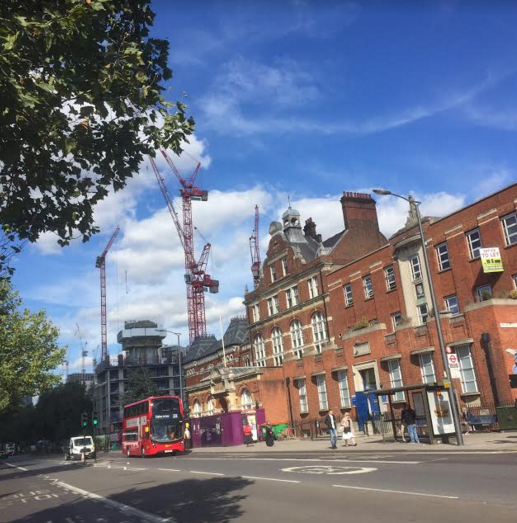
In the midst of the sensory overload, markers of the future, of progress, infringe on the present. Cranes stretch skyward all along Walworth Road and radiate out across greater Southwark and Lambeth. My new postcode is in the middle of a major redevelopment process.
 |
|
RevitaliSE 17. SE17 1JL is the neighborhood postcode. |
Many of the construction sites have signs explaining what the projects will do and bring to Southwark, how they will engender greater equality and access. The Southwark Library is undergoing construction across the street and will serve as a community center and site for educational access to everyone in the community. Plaques in front of the lego-like skeletons of high-rise buildings promise warm, dry, and affordable housing.
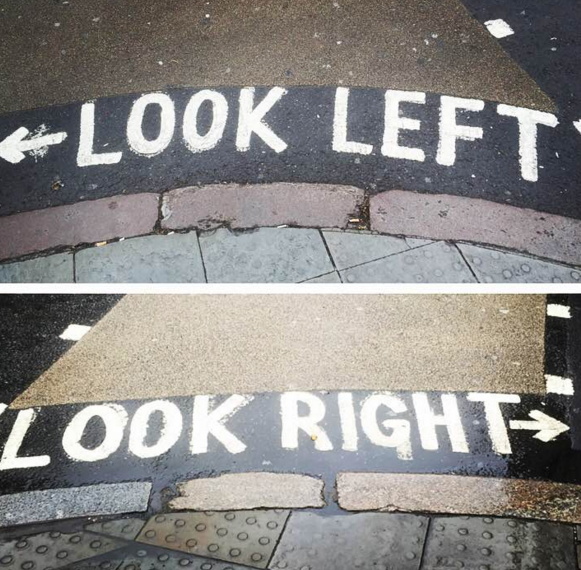
I realize why these promises are necessary. Examples of North-South inequalities presented themselves on my first trip through the Elephant & Castle underground station, where tiles chip from the walls and the fabric of seats were faded, frayed, and ripped. The station lacked the colorful art of Charing Cross. The pebbling asphalt erases the “Look Left/Look Right” signs that kept me alive in my first weeks in London.
Living south of the river grants daily observations of differing standards and levels of access in London, but I am also witness to the great efforts underway to expand and bolster the impressive array of services throughout the community. There’s an undercurrent running between the new demonstrations of progress and the lingering inequalities: that communality of London life, a historical ideology of shared space and resources. The Southwark Council is working to promise better opportunities and resources to those in the neighborhood, with support and with critics. From my window view of Walworth Road, I’m ready to see how the dialogue plays out.
 |
|
Cranes in the sky on Walworth Road |
 |
|
Buy N Buy: Proudly African |
 |
|
Chinese and Vietnamese Food – Mama Thai |
 |
|
Mixed Blessings Bakery: West Indian and English Bread |
 Echo Foxtrot
Leave a comment